
The Future of AgTech in Latin America: Kicking Off 2026
AgTech in Latin America is moving fast, though not necessarily in the right direction. Are we building technology to transform all of agriculture, or only a handful of elite crops?

The Future of AgTech in LATAM Heading Into 2026: Are We Building Tech for Everyone—or Only for “VIP” Crops?
Over the past few years, I’ve been fortunate to sit in the front row of AgTech in Latin America while leading Space AG. What I see excites me… yet it also worries me.
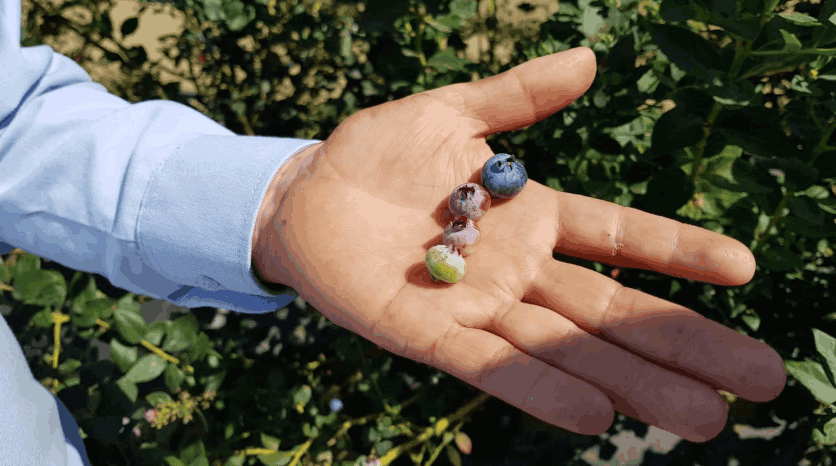
If we’re being honest, the vast majority of the solutions we are building in the region aren’t designed for “agriculture” as a whole. They are built for a very select club: blueberries, avocados, table grapes, and citrus.
That’s no coincidence—that’s where the money is today. Yet it raises an uncomfortable question: Are we building the future of Latin American AgTech, or merely digital tools for a handful of elite agro-exporters?
To answer this, we need to connect six major global shifts reshaping our industry right now.
1. Machinery Is Getting Cheaper; Software Is Getting More Expensive
While we argue over whether a sensor costs $200 or $300, China is flooding the global market with cheaper, increasingly capable agricultural machinery—tractors, sprayers, and equipment sold at a fraction of the cost of legacy brands.
This creates two immediate ripple effects:
- The barrier to entry for hardware is collapsing: Mid-sized growers can now buy the “iron” that used to be exclusive to industry giants.
- Value is migrating aggressively toward software and intelligence: If your tractor looks almost identical to your neighbor’s, what sets you apart is how you irrigate, fertilize, optimize labor, and sell—not what color your tractor is.
The risk for LATAM is clear: we could end up becoming mere consumers of cheap hardware while the strategic value—data, algorithms, and decision-making—is captured from Silicon Valley, Tel Aviv, or Shanghai.
2. Tech Integration + AI: From “Isolated Apps” to an Agricultural Nervous System
For years, the industry pitch was, "Let’s deploy more sensors, more drones, more satellite imagery." That is no longer enough. Today, agricultural managers are asking for something entirely different:
- For the drone to talk to the satellite
- For the satellite to talk to the irrigation system
- For field apps to talk to the ERP
- And for all of that to turn into actionable decisions right on a smartphone
That’s where Artificial Intelligence comes in—not as a buzzword, but as a silent engine that cleans noisy field data, predicts yields, frosts, and pests, and tells managers which block to scout, where to trim labor, and how much nitrogen to save.
Yet again, most of these solutions are being built for high-value crops with margins fat enough to pay for that intelligence. What are we building for the smallholder avocado grower, or the potato and onion farmer who doesn’t export to Costco or Whole Foods?
3. From an Obsession With Efficiency to the New Mantra: Profitability or Death
Another profound shift is underway: the market is no longer rewarding the "plus 3% yield" pitch unless it translates directly into higher margins. Latin American farms today want:
- -X% in labor costs
- -Y% in water and fertilizer usage
- +Z points in margin per hectare
- Fewer surprises at harvest (weather risk, pests, quality issues, and rejections)
In short: fewer pretty dashboards and healthier income statements. AgTech has to mature. If a farm manager can’t see, in dollars, how a platform moves their P&L, the project dies right after the pilot.
4. Where Are AgTech Investors Pointing Their Capital?
After the 2019–2021 boom came the hangover. Between 2023 and 2024, venture capital became far more selective—writing fewer checks for brilliant ideas without a business model, and backing startups with proven products, paying customers, and solid unit economics. Above all, there is now a much stronger appetite for acquisitions rather than betting on distant unicorns.
Across recent M&A activity, four clear patterns stand out:
- Data and intelligence platforms: Acquiring companies that integrate sensors, weather, imagery, and predictive models into a single layer.
- Robotics, automation, and computer vision: Solutions for greenhouses, pruning, harvesting, sorting, and packing that directly relieve labor shortages, not just information gaps.
- Irrigation and water management: Bundling design, installation, monitoring, and agronomic recommendations into one package. Whoever controls water data in a drought-prone world holds massive leverage.
- Consolidation among AgTechs: Larger platforms acquiring specialized algorithms, sensors, and niche tools to fill product gaps.
Capital has stopped rewarding “cute apps.” It is buying technology that becomes critical agricultural infrastructure.
5. Genetics and Varietal Turnover: The Silent Revolution
While we stare at screens, another revolution is advancing in parallel: genetics + data + AI. New varieties in crops like blueberries and table grapes—offering better firmness, flavor, post-harvest shelf life, and water-use efficiency—are driving massive varietal replacements that can make or break a business within 5 to 10 years.
Here, AgTech has a massive, largely untapped opportunity in LATAM: becoming the operating system that guides varietal decisions—where to plant, how to manage, what yields to expect, and what risks to take. Because a bad genetic decision cannot be fixed with another sensor; it is solved with historical data, predictive models, and long-term vision.
6. What M&A and Investment Trends Tell Us About LATAM’s Future
When we put all these pieces together, the outlook for our region is tough, yet realistic:
- We have entered the consolidation phase: There will be fewer AgTech startups, but the survivors will be much larger and tightly integrated with machinery manufacturers, irrigation providers, input companies, banks, and insurers.
- The most valuable asset is no longer the code—it’s the data and the grower’s trust: Code can be copied. The relationship with the grower, their 5–10 years of historical field data, and the ability to turn that into decisions cannot.
- Buyers will look for regional champions: Integrated platforms that truly understand Latin American realities—messy data, poor connectivity, labor informality, crop diversity, and smallholders operating alongside giants in the very same watershed.
- If we don’t build that “nervous system” from here, others will build it for us: And Latin America will become a raw-data supplier while the real value is generated outside our region.
The Real Controversy: Who Are We Leaving Behind?
The real controversy isn’t that we are developing technology for high-value crops. The real controversy is this: Do we have the courage to use that very same technology to transform the agriculture that isn’t “sexy” to VC funds today, yet feeds our countries?
If all of our talent, capital, and creativity remain trapped in the top five premium crops, we will have built a Latin American AgTech ecosystem that creates high value while leaving behind the vast majority of small and mid-sized farmers.
My bet—and my invitation—is different:
- Let’s leverage investor and strategic buyer interest to build rock-solid platforms in high-value crops.
- Yet starting today, let’s design those platforms to scale downward: to the smallholder, to the domestic market, to the crop that doesn’t show up in venture capital reports, but sits on our people’s plates every day.
If we don’t do it ourselves, nobody will do it for LATAM. And when we do, the future of AgTech will truly be bright—because it will impact millions of lives.
Últimas noticias

The Future of AgTech in Latin America: Kicking Off 2026
Another Blueberry Season, Another Broken Yield Forecast